

- The Best Rosé Wine Online: A Buyer’s Guide - September 10, 2026
- Buying Wine Online vs In-Store: Understanding Which Option Works Better for You - July 23, 2026
- Wine Insiders vs. Total Wine & More: Comparing the Retail Giant Against Online Convenience - July 8, 2026
If you’ve ever stood in the wine aisle at the grocery store, Total Wine & More, or Costco, squinting at the back label of a bottle and trying to decide if a 91-point rating justifies the price, you’ve probably second-guessed yourself and wondered if you’re doing something wrong.
An in-person trip is painless to those who know what they’re doing, but the knowledge barrier of buying good wine has sent a lot of people in a new direction that’s only been made available in recent decades: buying wine online.
Online shopping has become a genuinely viable option for drinkers of all sorts, and where to do your wine shopping will come down to how often you buy, what you’re buying, and what matters most to you.
Here’s a look at both sides.
Table of Contents
Where Online Wine Shopping Has an Edge
Diverse Selection That No Physical Store Can Match
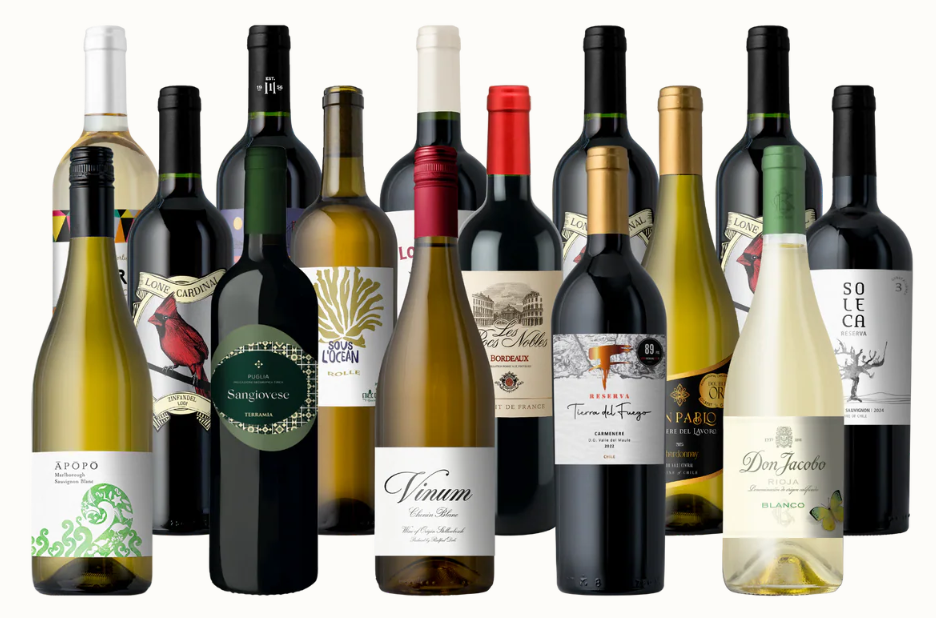
Walk into even the best-stocked wine store, and you’re looking at a few hundred to a few thousand SKUs selected for regional demand and shelf turnover.
Shopping with an online retailer, on the other hand, adds a level of curation based on the site’s philosophy. A good online wine retailer sources from producers across dozens of regions and varietals, including smaller-production wines that never make it to big-box retail because the volumes don’t justify distribution deals.
For someone who wants to move beyond the same rotation of California Cabernet Sauvignons and New Zealand Sauvignon Blancs, the discovery potential online is higher, especially if the provider actively curates their selection rather than just warehousing volume.
Price Transparency & Better Value
Big-box retailers like Costco and Total Wine & More certainly offer competitive pricing, and it’s a major part of their appeal. But online wine services that work directly with wineries often cut out an additional layer of the distribution chain, which can translate to better prices per bottle for equivalent quality.
Even online retailers that purchase from distributors tend to still be more accessible since they don’t have the added costs of a brick-and-mortar retail establishment (or warehouse) to maintain.
The more important advantage of online shopping is transparency. You can compare bottle prices across various websites, explore tasting notes and producer stories, check scores, and see exactly what you’re getting before you commit. If you shop in-store, you’re often relying on shelf talkers where available or, if you’re lucky, a floor associate who has enough wine knowledge to help you make a good selection.
Delivery Convenience
This will depend on how you define convenience.
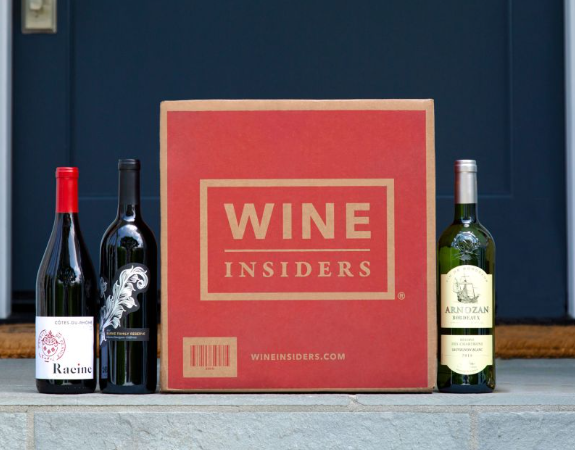
If you like the convenience of driving to your local wine store and having a bottle in 15 minutes, in-store wins every time. But if you want the convenience of buying a curated case of 12 and letting the bottles come to you, ordering online is unmatched. Most reputable online retailers ship within two or three days, and many offer delivery to pickup locations like FedEx or UPS if you’d rather not deal with signature requirements at home.
For regular wine drinkers who go through a few bottles a week, the subscription or recurring order model makes even more sense. You set your preferences, your wine ships on a schedule with upcoming order reminders, and you don’t have to remember to restock.
Better Information at the Point of Decision
Online wine shopping gives you access to full tasting notes, vintage information, food pairing suggestions, and customer reviews before you buy. You can research a bottle in a few minutes to make a great selection in a way that simply isn’t feasible when browsing shelves. The alternative is to browse the wine aisle with your phone out, which is doable but limiting.
For people who know their preferred wine style or have a lot of producer knowledge, this information is very useful and removes the guesswork from trying something new.
Where In-Store Still Wins
15-Minute Bottles
As noted, if you need a last-minute host gift or a bottle for tonight’s dinner, in-store is the way to go. There’s no planning ahead, no shipping wait, and no scheduling around delivery windows.
Online wine delivery has gotten much faster, but it can’t compete with instant availability.
Wine-Fluent Salespeople
A knowledgeable floor associate at a good shop is like a walking, talking wine bible. They can ask you a few questions — what you’ve liked before, what you’d like to spend, what you’re pairing it with, or what occasion you’re purchasing for — and hand you something you’ll likely enjoy in a matter of minutes.
That kind of real-time, responsive guidance is difficult to replicate online, even with good filtering tools and recommendation engines. That being said, some websites have live chat agents to answer basic questions, and some wine subscription services also provide a wine concierge to help guide your selections.
The Ability to Taste Before Buying

Getting to actually taste a wine before committing to a bottle is something online shopping can’t offer. Meanwhile, many wine shops host regular tastings, either during scheduled events or informal pours on the floor. For buyers who are still developing their palate or trying to navigate a new varietal or region, this hands-on access has real value.
No Minimums or Commitments
In-store buying has zero friction for small purchases. You can walk in, grab a bottle or two, and leave. Online wine services, on the other hand, often work best when you’re buying in quantities or through a subscription model.
For occasional buyers or people who want to buy a few bottles at a time, in-store remains the more practical format. Plus, there are no added shipping costs when you walk into a store to purchase wine.
What to Look For if You’re Making the Switch to Online

Not all online wine retailers are the same, and the quality of the experience varies significantly. Here are a few things worth prioritizing.
Expert Curation over Sheer Volume
A retailer stocking thousands of wines without a clear ethos or philosophy for their portfolio isn’t necessarily more useful than one with a tighter, well-chosen selection. Look for services where a credentialed team of sommeliers, winemakers, or industry buyers actually tastes and selects what wines make the cut — that’s what separates a curated online wine shop from a warehouse with a checkout cart.
Direct Relationships with Wineries
Services that source directly from producers rather than going through layers of distribution tend to have better prices on equivalent quality. This is the structural advantage that lets an online retailer beat big-box pricing at the $10–$20 price point where many people shop.
A Satisfaction Guarantee
Buying wine you haven’t tasted involves some risk. The best online retailers stand behind their selections with a genuine guarantee. For example, if you don’t love a bottle, they might just ship you a new one. That kind of assurance removes the reluctance to try something new online.
Flexible Buying Options
Whether you want a subscription, a one-time case, or the ability to build your own selection à la carte, the best services accommodate different buying styles without locking you into one model. Look for services that let you pick your own bottles (especially on the first order) so that you’re not stuck with someone else’s choices before you know whether you trust their taste.
Real-World Examples of In-Store vs. Online Wine Shopping
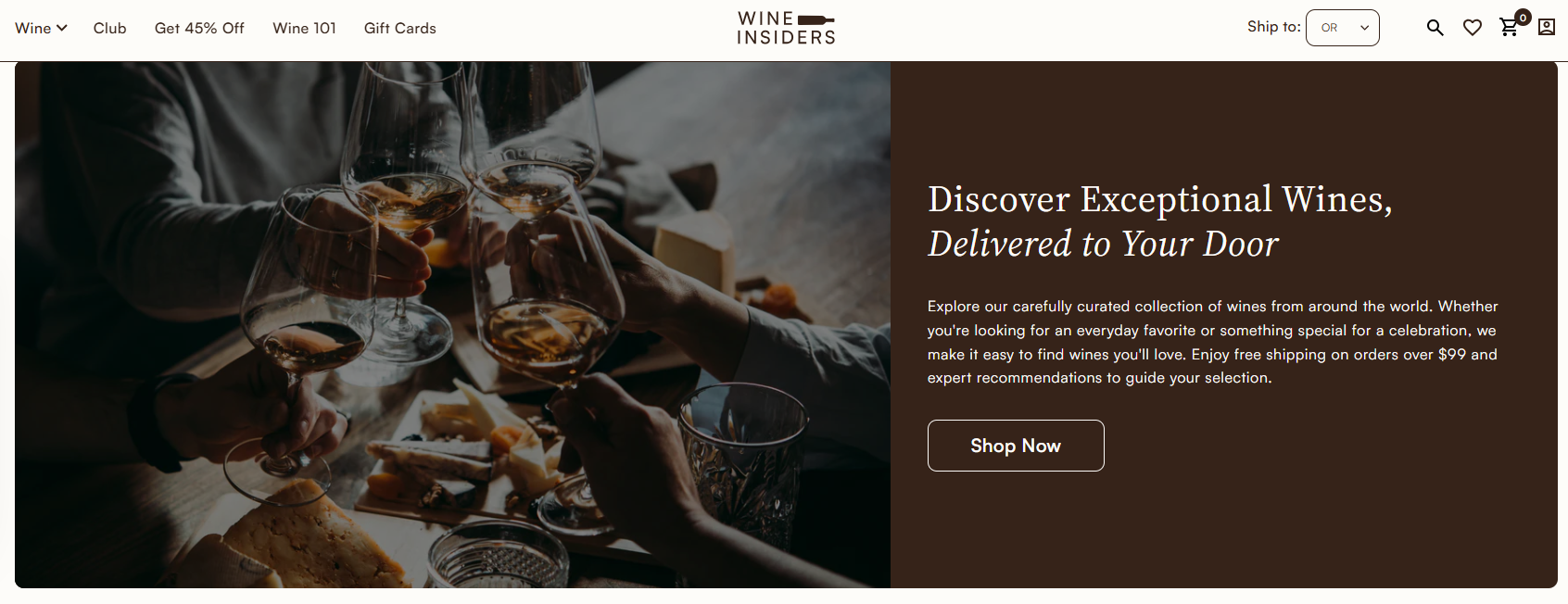
For a sense of what these two wine shopping experiences actually look like, let’s look at Total Wine & More and Wine Insiders — two retailers at either end of the spectrum.
Total Wine & More is a great representation of what in-store shopping does well, with a large, accessible selection at competitive prices, staff on hand to help you narrow down your choices, deals and loyalty rewards, and excellent tasting events.
Wine Insiders does online delivery very well, with a panel of sommeliers and winemakers who select the wines, direct-from-producer sourcing to keep most bottles under $20, and a 100% satisfaction guarantee that takes some of the risk out of buying wine you haven’t tasted yet.
Neither is objectively better than the other; they simply serve different shopping habits.
Practical Questions to Ask Yourself Before Deciding In-Store vs. Online

Before picking a method or switching from something that’s already working, it’s worth thinking through a few things:
How frequently do you actually buy wine? If you’re drinking wine several times a week, the economics and convenience of buying cases online makes a lot of sense. If you only buy a bottle here and there for specific occasions, in-store is probably the way to go.
Do you have strong preferences about grape variety and region? Buyers who know what they like and want access to a wider selection of it will find more of what they’re looking for online. Buyers who are still exploring and benefit from staff recommendations may get more value from a good local wine shop.
How much does price matter? If you’re regularly buying in the $10–$20 range and care about getting the best wine for the money, direct-to-consumer online services tend to have better value than retail at that price point. Specialty wine shops become more relevant if you’re willing to spend a bit more, but you can still find value at retailers like Total Wine & More, Costco, and even Trader Joe’s. One of the perks of online shopping is the combined benefits of value and breadth of options at the price point you’re seeking.
What’s your relationship with the shopping experience itself? Some people genuinely enjoy browsing a wine shop. It’s part of the pleasure of wine enjoyment for many drinkers, so if the in-store experience adds something to your week, that’s a legitimate reason to keep doing it.
In-Store, Online, or Both?
In-store wine shopping isn’t going away anytime soon, and the instant availability, convenience, possible tasting opportunities, and ability to get wine advice from savvy associates are huge advantages. But for regular wine drinkers who want a wider selection, better price transparency, and the ease of receiving wines at home, online buying is a serious upgrade.
However, both avenues meet varied needs and can be used in a complementary way. If you haven’t shopped for wine online yet, try it out and see how the curation compares to what you’ve been pulling off the shelf. It’s a great way to discover wines you might not have access to otherwise and can help expand your palate to help you make better wine selections next time you’re browsing the wine aisle.


We partnered with FirstLeaf Wine Club to bring you this special offer: 6 wines for $39.95 + Free Shipping. All you have to do is Take the Quiz and let FirstLeaf take care of the rest.