

- Selecting & Serving the Best Affordable Cabernet - November 1, 2026
- Best Wines for Hosting Guests - September 25, 2026
- Joining a Wine Club vs. Buying Wine Yourself - May 11, 2026
Two bottles of Cabernet Sauvignon can sit side by side on a shelf, cost the same, and taste nothing alike. The grape grows in more places than any other wine grape, from the Mediterranean to Chile, South Africa, Australia, and both coasts of North America. Grown in a warm valley, Cabernet makes a plush, jammy wine. Grown somewhere cool, the same grape can taste of green pepper and fresh herbs.
That range explains its popularity, and it also explains the biggest problem in selecting your cab: to get maximum enjoyment out of your bottle, you need to know how to read a label and match your purchase to your preferences. Region, vintage, producer, and price each give you a clue, and this guide shows you how to read them.
Table of Contents
Savvy Selection Can Save Your Budget
Because Cabernet grows everywhere, it sells at every price: $10 at the grocery store, $40 at a local wine shop, $500 from a famous Napa estate. But a higher price tag does not mean you’re going to enjoy your bottle more – a thoughtful selection process means you can put a delicious glass on your table for an affordable price. Keep these two guidelines in mind:
1. Do Not Assume a Wine is Better Because it Comes from Napa or Bordeaux
Both regions make great Cabernet, and both charge a premium for their name. Wine critics are increasingly including Napa’s best-known brands among the most overrated reds. Bordeaux brings its own complications. Left Bank wines have firmer tannin and higher acidity than most Napa bottles at similar prices, and they often need years in the cellar before they come together. Shop by producer, vintage, and independent review rather than by famous address.
2. Do Not Spend More than $50 Unless you Plan to Cellar
If you’re planning to take the cork out any time in the next few years, there’s no reason to spend more than $50 on a bottle of Cabernet. Above that price point, much of what you pay for is aging potential: firm tannin, lively acidity, concentrated fruit, and new oak, all built to improve the wine’s taste over the next 10 to 25 years. Opened young, those wines often taste tight and closed, so you end up paying for qualities in the wine that have not arrived yet.
Five Hidden Gems Under $25
Value is easiest to find under $25 when you look at lesser-known regions and recent vintages.
2022 McManis Family Vineyards, Lodi, California
The region. Lodi, in California’s Central Valley, is better known for old-vine Zinfandel than for Cabernet, but its growers also built something unusual: Lodi Rules, California’s first third-party-certified sustainable wine-growing program. ‘Sustainable’ has no single legal definition on a wine label, so this program backs the word with audits. Vineyards meet more than 100 standards, from soil and water management to worker welfare.
The grower and the year. The McManis family has grown grapes in this part of California since 1938, and its wines are certified sustainable under the Lodi Rules. This Cabernet is blended with small amounts of Petite Sirah and Petit Verdot, spends about a week on the skins, and ages four to six months in new and used French and American oak.
How to experience it. The wine is dark garnet, with blueberry, blackberry, and black cherry, and a hint of smoke from the oak. Expect a juicy, medium-bodied wine with rounded, creamy tannins and a touch of mocha. Pair it with barbecue pulled pork or chicken, or a sausage-heavy pizza or baked ziti. Brie makes a good starter, and dark chocolate mousse a fitting dessert.
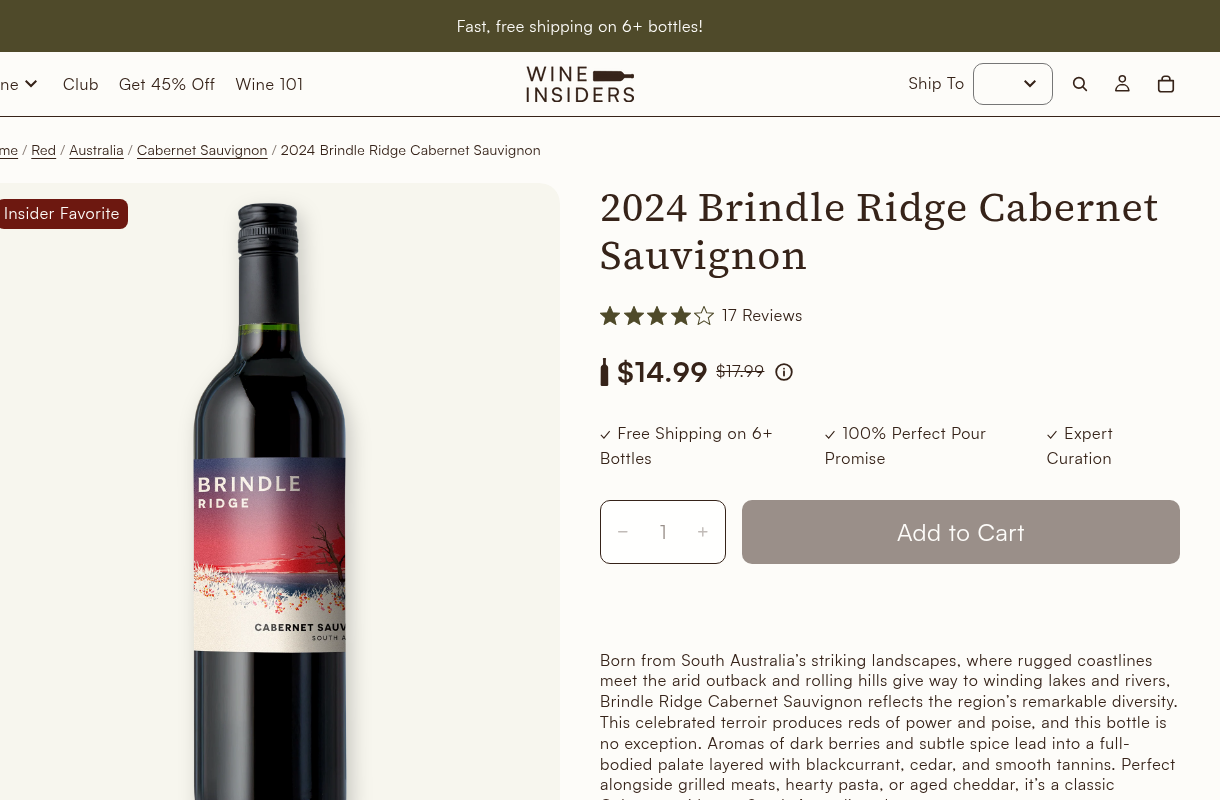
2023 Montañero Private Reserve, Maule Valley, Chile
The region. The Maule Valley of Chile is best known for old, heritage vineyards, which cover more area there than anywhere else in the country. The conditions suit the grape: hot sun by day, cooling coastal winds at night, and granite-and-clay soils make an excellent cab.
The grower and the year. Montañero is made by Terraustral Wines. The grapes are hand-harvested, and the wine spends six months in American and French oak. The 2023 harvest favored ripe reds: central Chile had a warm vintage with an early, hot harvest.
How to experience it. This bottle gives ripe plum and toasted hazelnut on the nose, then blackberry and cedar on the palate, with juicy, intense tannins. This is a fruit-forward, lightly oaked style that is meant to drink well immediately. Pair it with pasta Bolognese, aged cheeses, empanadas, or barbecue.
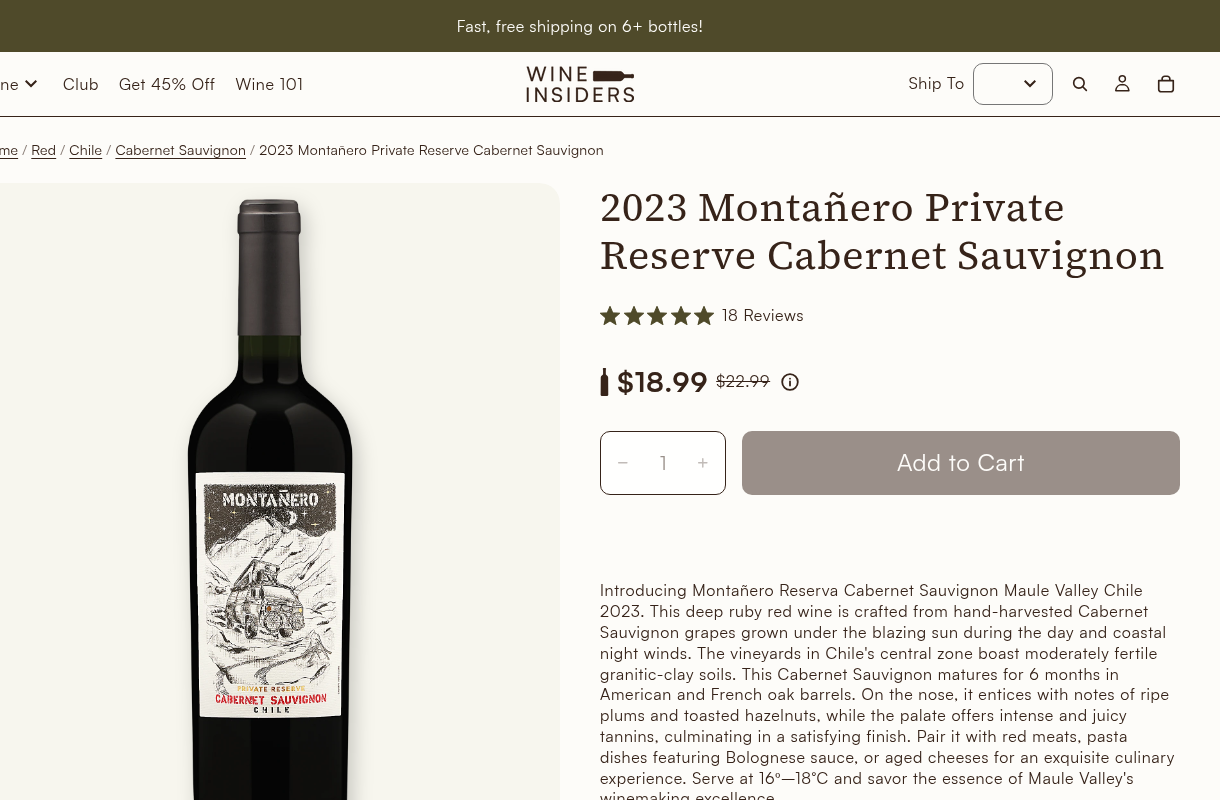
2024 Brindle Ridge, South Australia
The region. South Australia is one of the world’s great wine regions and is famous for Shiraz, but Cabernet does well here too. McLaren Vale makes a lush, approachable wine with softer tannins.
The grower and the year. South Australia’s 2024 growing season was very dry, with ideal ripening conditions and strong varietal expression across the reds, with Cabernet Sauvignon performing especially well.
How to experience it. You’ll find a rich blend of cassis, black cherry, cedar, and dark chocolate, with a full body and smooth tannins. Expect ripe, generous fruit and a subtle floral note giving this wine a plush finish. Pair this chocolate-edged Cabernet with slow-smoked brisket or a pepper-crusted pork tenderloin, where spice meets ripe dark fruit. For a meatless table, try roasted eggplant or a smoky black bean burger.
2022 Reino de Altuzarra, Navarra, Spain
The region. Navarra, in northern Spain next door to the more famed La Rioja, sits where the Pyrenees slope down toward the Ebro River. This region was long known for rosé, but it was one of the first in Spain to experiment with international grapes like Cabernet. Atlantic, continental, and Mediterranean climates all meet here. This wine comes from Tierra Estella in the north, where the heat stays moderate and nights start cooling off in August; that slows ripening and keeps the acidity bright.
The grower and the year. Reino de Altuzarra is a Navarra winery that keeps a low profile, and its importer calls this Cabernet fresh, elegant, and balanced. The 2022 season was the hottest and driest in Navarra in 60 years, and harvest began in mid-August, among the earliest on record. The drought produced small, thick-skinned berries, but the dry weather kept the fruit healthy.
How to experience it. The wine is deep garnet, with brambly berries and notes of cigar box, eucalyptus, and chocolate on the nose. On the palate, it offers cherry, Mission fig, caramel, and violet, with a soft floral note and a lengthy finish. Expect a medium-bodied wine with firm, bright tannins. This wine has a lot to say; pair it with a simple meal such as a roast turkey and white bean stew. For a Navarrese touch, try Roncal cheese or stuffed piquillo peppers.
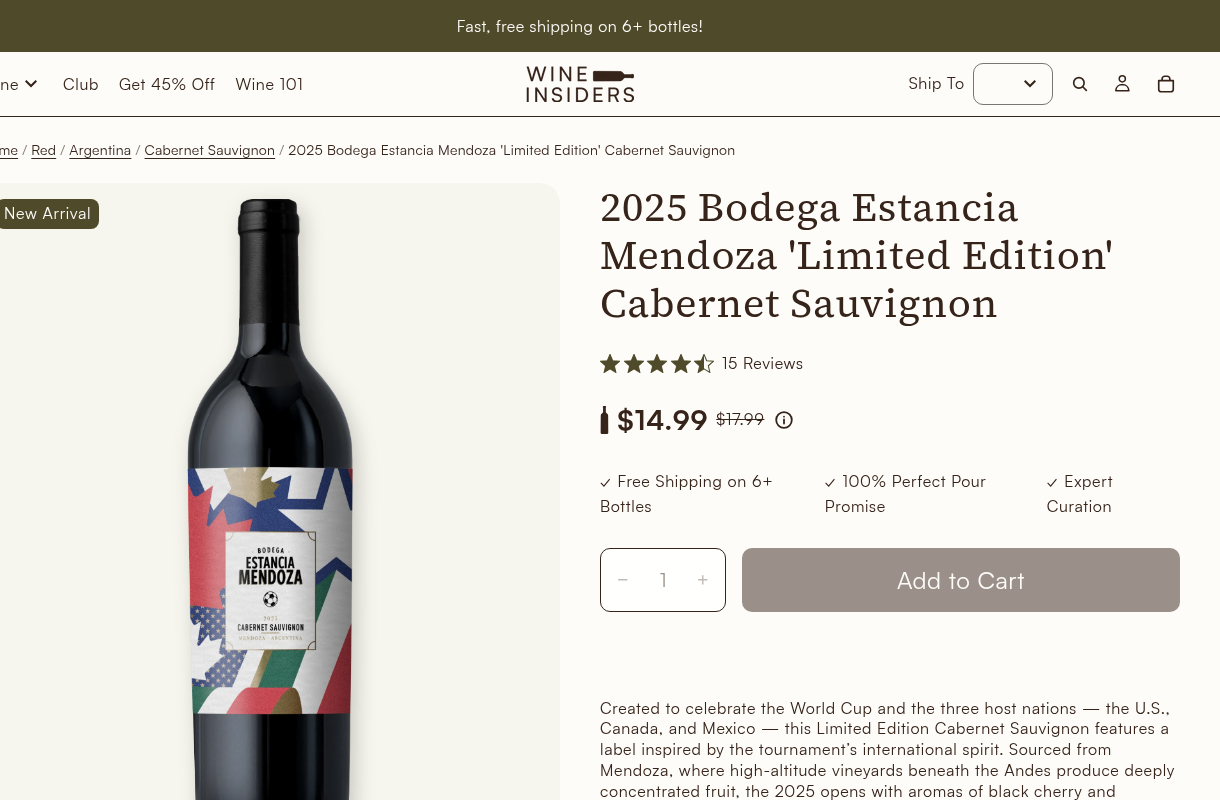
2025 Bodega Estancia Mendoza Limited Edition, Mendoza, Argentina
The region. This winery sits in Tupungato in the Mendoza highlands, where high-altitude plains resting against the backdrop of the Andes produce a deeply concentrated fruit. Mendoza produces the majority of Argentina’s wine, and for most drinkers it is synonymous with Malbec. Cabernet plays a supporting role, but a capable one.
The grower and the year. The 2025 vintage began as one of the earliest and warmest on record in Argentina, but concluded its growing season with rain and cooler weather. Good winter snowfall the winter prior brought healthy yields noted for their excellent quality, power, and deep color. As a limited release, it may not stay in stock for long.
How to experience it. This bottle produces a fruit-forward blend of black cherry, blackberry, and raspberry, with a note of pink pepper in a full-bodied, surprisingly dry wine with firm, elegant tannins. Pair it with slow-roasted lamb and potatoes, or grilled beef and a side of pasta with red sauce.
Where to Browse Cabernet on Your Own
If you want to browse for yourself, these five sites cover most of the ground, from everyday bottles to wines made for the cellar. Wine shipping laws differ by state, so confirm that a site delivers to you before you fill a cart. Shipping costs can also add a lot to a single-bottle order, and in summer heat is the biggest threat to a bottle in transit, so look for expedited or heat-protected shipping.
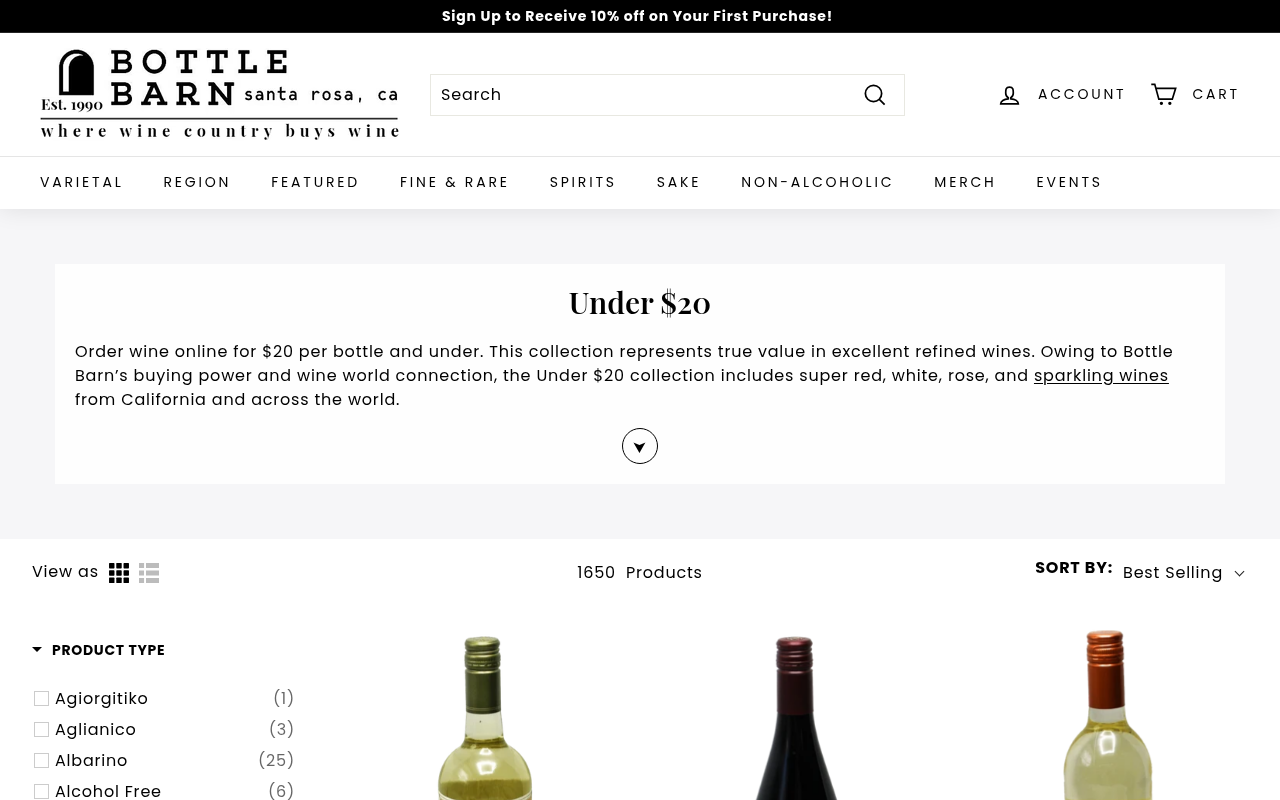
Bottle Barn
A family-owned shop in Santa Rosa, California, open since 1990 and selling online since 2018. The online store carries a curated selection of in-store inventory, with the goal of making a $10 bottle taste like a $30 one. Its under-$20 collection is easy to browse.
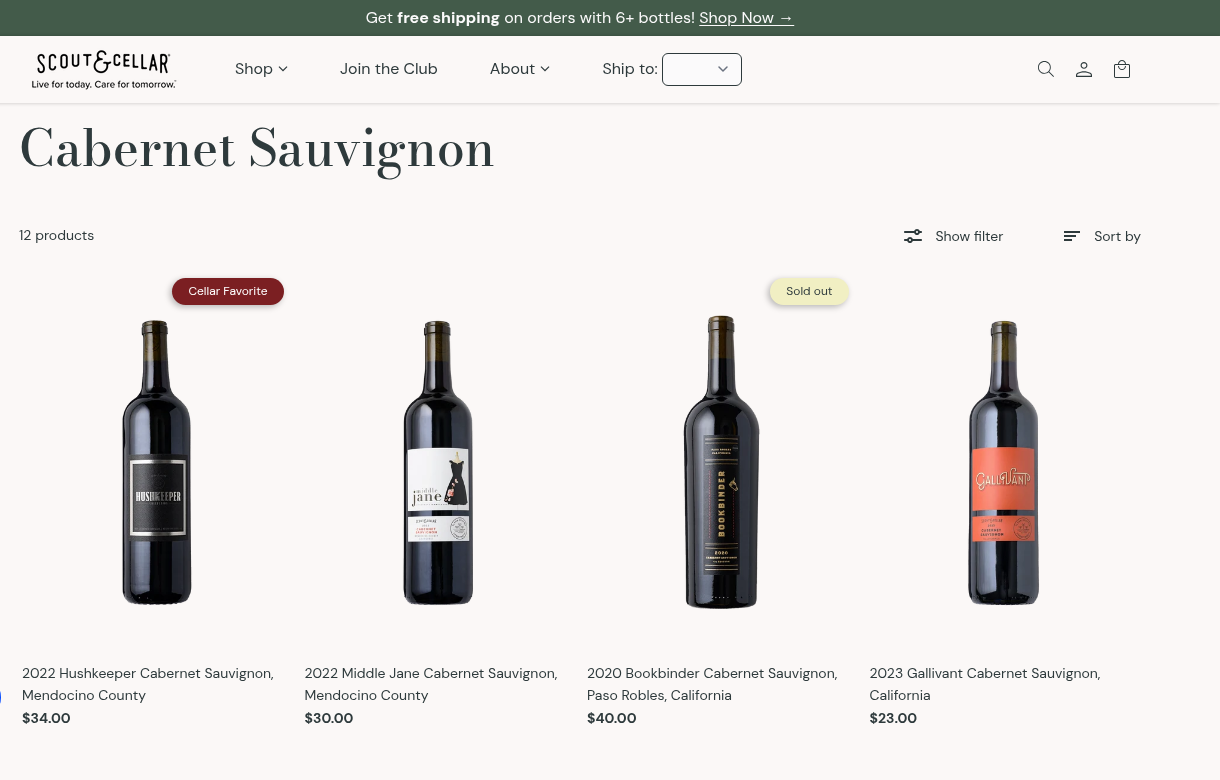
Scout & Cellar
A Texas company built around what it calls “clean-crafted” wine: grown without synthetic pesticides, made without added sweeteners or chemical additives, and put through two rounds of independent lab testing. It sources from small, family-owned vineyards and is a certified B Corp. It suits shoppers who care about farming and ingredients and enjoy a guided tasting.
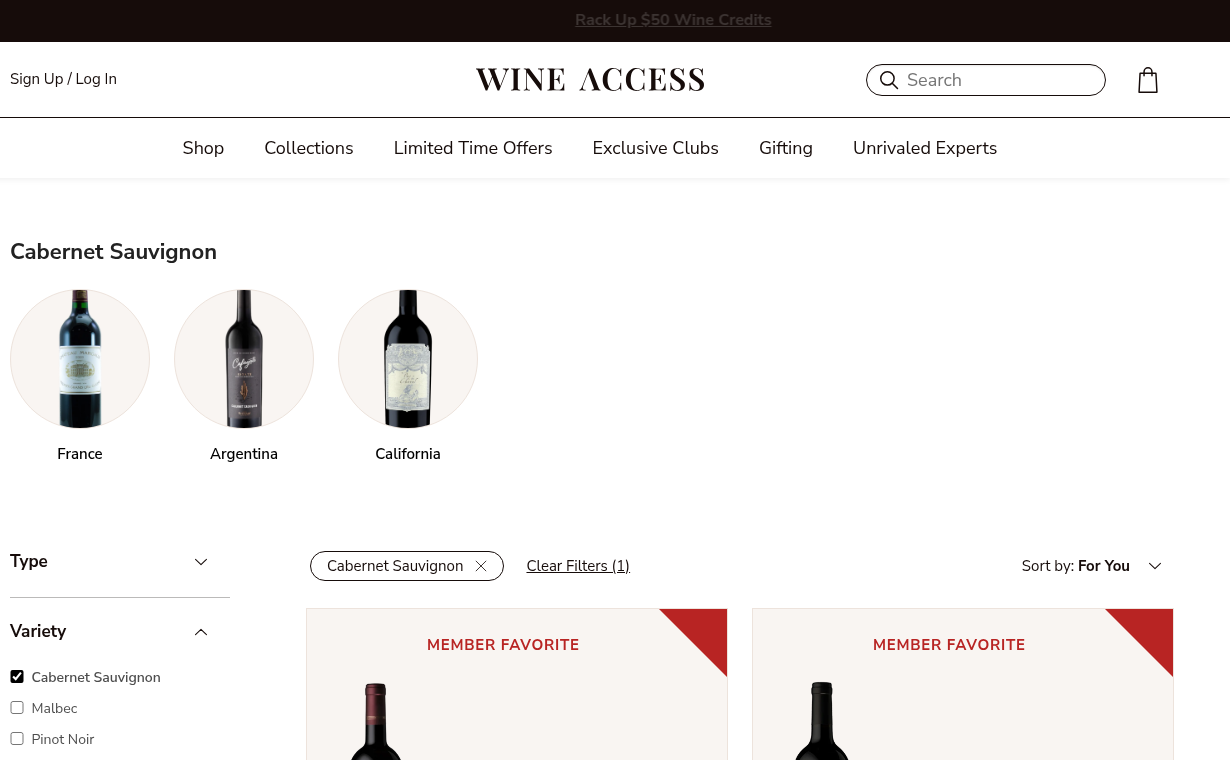
Wine Access
A Napa-based online retailer, in business since 2007, that sells wines chosen by its team of sommeliers and wine professionals. It says the team tastes more than 20,000 wines a year, keeps the ones that overdeliver for their price, and sources each offer directly from the winery. Its Cabernet page spans the $20s up through the $80s and beyond, so there are options for most budgets, and wine clubs are available for shoppers who want picks sent to them.
Wine Insiders
A direct-to-consumer online shop that has operated for more than 35 years and says it keeps prices down by working with wineries directly. Each wine shows a traditional retail price beside its own “Insider Price.” Three in-house curators choose the wines, and a wine club is available. Shipping is calculated by weight, and local pickup is offered at more than 14,000 locations.
Wine Library
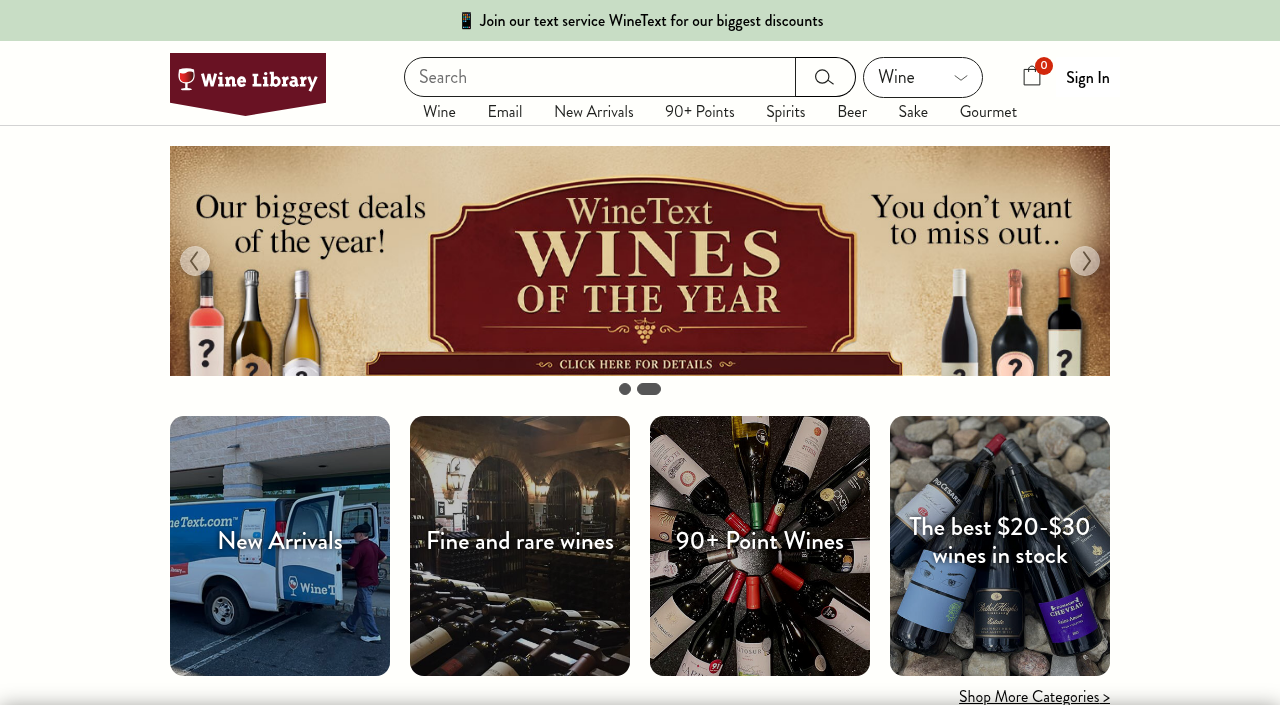
A retailer in Springfield, New Jersey. The online catalog allows you to sort by reviewer score, free-shipping wines, and wines scoring 90 points or higher, which helps when you are hunting for the sweet spot between price and value.
How to Serve Your Cabernet Like a Pro
Cabernet is the consummate cozy winter wine, and its need for cooler conditions breaks against the traditional expectations for how to treat a red. Bottles that feel warm in your hand will be harsh or sharp, because alcohol crowds out the wine’s fruit and subtler flavors. If you’re serving this wine in a warmer room, pop the bottle in the refrigerator for 15 minutes before opening to keep the spirits from dominating the flavor.
A young bottle of Cabernet, roughly anything from the last five vintages, usually tastes tighter and more tannic right out of the bottle than it will taste after some air. Plan at least 45 to 90 minutes in a decanter or large pitcher. A Bordeaux-style glass, tall with a broad bowl, gives a bold red room to breathe and lets its aromas gather. Hold your glass by the stem so your hand does not warm the wine.
Cabernet Sauvignon is the wine to reach for when rich and savory foods are on the menu. Tannins bind to protein and fat, which softens them and lets the fruit show. Ribeye steak, lamb, short ribs, and burgers are the classics to pair with a warmer Cabernet. If you’re reaching for a cooler-climate cab, pair it with aged cheddar or manchego cheese, and lighter entrees such as portobello steaks or mushroom risotto, or meatier fish such as tuna or swordfish. Grilling helps because the light char echoes the wine’s own bitterness.
Wherever you get your wine from, the method for selecting and purchasing your wine stays the same. Pick a region and vintage you have read about, check at least one independent review, and compare prices on Wine Searcher before you buy.


We partnered with FirstLeaf Wine Club to bring you this special offer: 6 wines for $39.95 + Free Shipping. All you have to do is Take the Quiz and let FirstLeaf take care of the rest.