

Cabernet sauvignon is one of the most recognizable wines in the world, but this can make finding the right bottle more of a challenge than you might expect. It’s grown across the globe, spans a huge range of styles, and includes everything from easy-drinking weeknight pours and collectibles to long-term stashes and “wow your friends” gifts.
There are simply way too many varieties and price points to just grab a bottle for any occasion, and if you buy without a plan, you might just end up spending $60 on a wine that tastes like it should cost $20.
To make it a little easier, let’s break down a few of the top online retailers so you can find the right cab for your taste, budget, and occasion.
If you just want the fast answer, here’s how they break down:
- For hunters and researchers: Wine.com. Thousands of bottles across every price point, region, and style, plus detailed filters to find exactly what you’re looking for.
- For easy, enjoyable shopping: Wine Insiders. Curated cases and single bottles, priced right for weeknight or weekend sipping.
- For value-conscious customers: Total Wine. Broad selection, competitive prices, and the convenience of same-day in-store pickup.
- For special occasions and enthusiasts: Wine Access. Curated fine wines, hard-to-find allocations, and trustworthy tasting notes.
- For collectors and cellar-builders: JJ Buckley. Focused on allocated Napa bottles, older vintages, and investment-worthy cabernets.
If you already know what you’re looking for, that’s probably enough to make a call. If not, here’s where each one stands out and how they work in practice.
Table of Contents
Wine.com: Best for Wide Variety
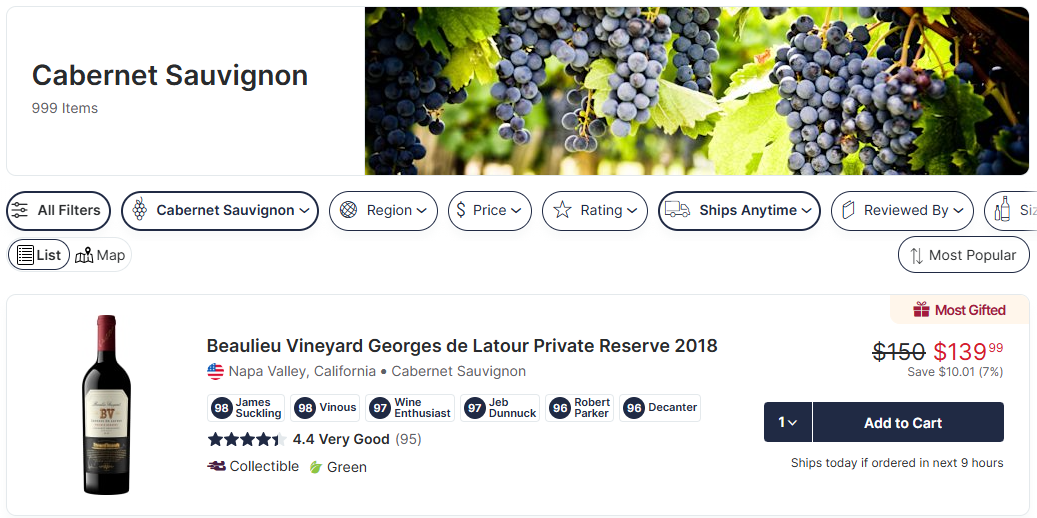
If you want selection, Wine.com is where you go. It’s the Amazon of wine, which is both its biggest strength and its biggest drawback.
For example, their cabernet selection is massive compared to most. They’ve got every price point, every major region, and every style from lean and earthy to big and extracted. Affordable drinkers can find plenty under $20, while enthusiasts can happily explore Napa, Sonoma, etc. On the high end, collectors can track down more serious bottles and brands if they know what they’re looking for.
Wine.com also lets you filter by critic score, price, region, rating, and food pairing, with user reviews and editorial picks layered in. And trust me, you’ll need to use the filters.
I would argue that Wine.com works best when you already have some idea of what you want, such as a producer you like, a region you enjoy, or a specific bottle you want to try. It’s also strong for gift-buying since you can quickly narrow to well-rated bottles at a specific price point. And if you have picky friends or family members, Wine.com most likely has their favored brand available.
But if you’re starting from zero? Getting overwhelmed is very possible, especially if you’re still figuring out your tastes/favorites. Plus, depending on where you order from, shipping can add up fast.
Pros
- Massive selection across all price points and regions
- Tons of filtering tools (critic scores, food pairings, etc.)
- Easy to reorder favorites or find specific bottles
- Great for gift-buying and well-rated picks
Cons
- Can feel overwhelming if you’re starting from zero
- Requires filters to navigate efficiently
- Shipping costs can add up quickly
- State availability can limit options depending on location
Wine Insiders: Best for Curated Cases and Affordable Single Bottles
When I buy wine, I’m not looking for collectibles or high-end vintages. I might keep a $25 emergency bottle on my rack for guests, but more often than not, I’m picking bottles under $15. I want wines I can open on a weeknight after a long day, or on weekends with my girlfriends while we stream Pride and Prejudice for the hundredth time.
That’s why I like Wine Insiders. They work directly with wineries, cutting out much of the traditional retail markup, so you get wines that taste fancier than they cost.
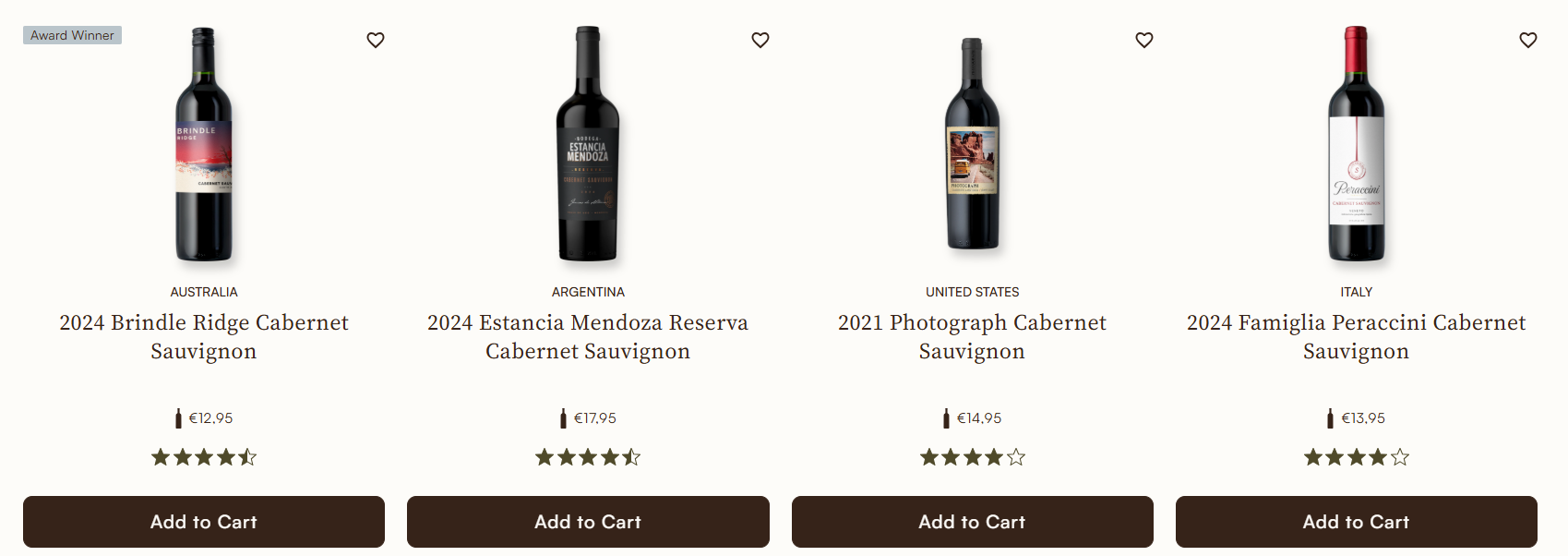
You can buy single bottles if you want, but their focus is on mixed packs and 6- or 12-bottle cases. Each pack is pre-selected or themed (like a California cabernet pack or a weeknight red pack) so you can try both new and reliable options each time you get a delivery. It’s a great setup if you don’t want to spend time choosing every bottle or just appreciate someone else doing the curating.
Most bottles sit in the $15 to $30 range, which hits the sweet spot for me and my fellow casual enthusiasts. Some of their single bottles can range into the high end, but there are more than enough tasty, affordable single bottles.
Their shipping is typically quick, and there’s a straightforward guarantee if something misses the mark, which makes it feel less risky.
Pros
- Good value, especially on curated cases
- Curated cases make trying new bottles easy
- Good mix of familiar and new wines in each delivery
- Frequent deals can bring bottles into the $15 to $30 range
- Straightforward guarantee and generally quick shipping
Cons
- Smaller overall selection compared to large retailers
- Focus is more on value than high-end or collectible wines
- Best deals often require buying in bulk (6- or 12-bottle cases)
Total Wine: Best for Value and Flexibility
Total Wine sits in a sweet spot between scale and usability. It has the footprint of a big-box retailer but enough wine knowledge behind it to feel curated in the right places.
The biggest advantage is flexibility. If you live near one of their locations, you can order online and pick up in-store the same day. I’ve done this when I needed a bottle quickly and couldn’t wait for shipping. In-store staff are also usually helpful if you want a quick recommendation.
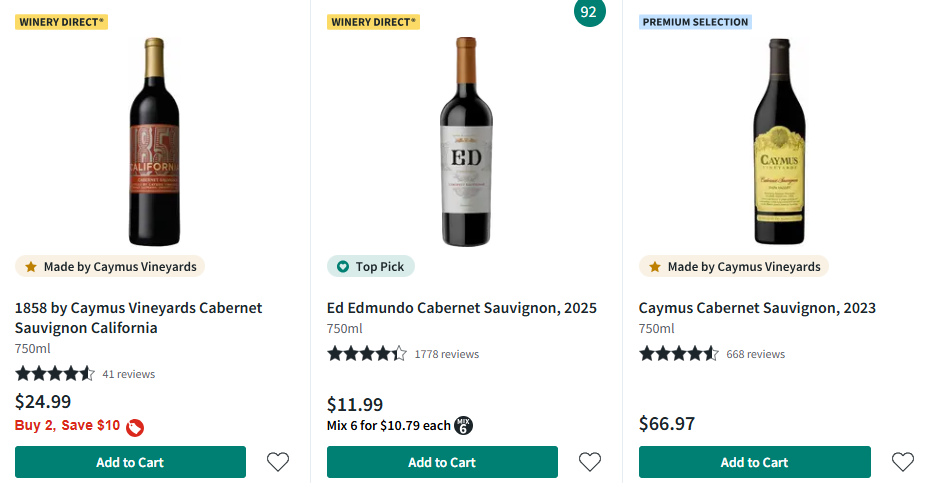
For affordable drinkers, this is one of the best places to shop. The cabernet selection is broad and aggressively priced, and the private label bottles often outperform their price. But for enthusiasts, there’s plenty in the $20 to $50 range, especially from California and Washington.
Where it falls short is at the top end. While there are some higher-priced wines here, collectors won’t find much in the way of allocated releases or older vintages. So I’d say that Total Wine is best for the affordable drinkers out there — those value-focused buyers and enthusiasts who want solid bottles without overpaying.
Pros
- Good value across everyday and mid-range cabernet
- Huge selection, especially at lower price points
- Private label wines often overdeliver for the price
- Same-day pickup at many locations adds real convenience
- Helpful in-store staff for quick recommendations
Cons
- Limited selection of rare, allocated, or older vintages
- Less appealing for serious collectors
- Big-box feel can lack a curated discovery experience
- Quality can vary more at the lowest price tier
Wine Access: Best for Enthusiast Shopping
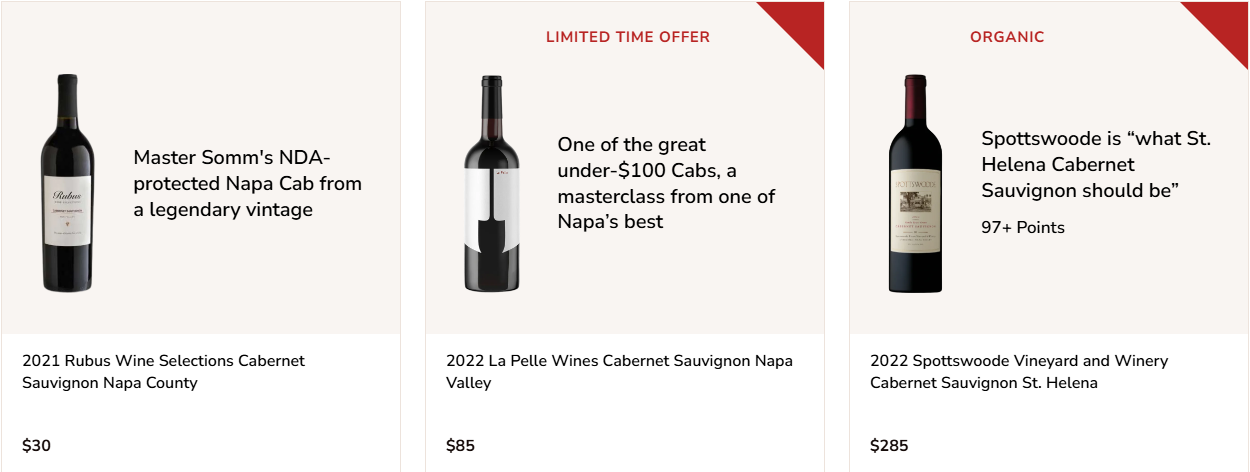
Wine Access advertises to a different tier, positioning itself as a fine wine retailer with real curatorial focus and built for people who really care about what’s actually in their glass.
Their cabernet selection leans heavily toward Napa Valley, with a wider depth regarding the kinds of producers that wine enthusiasts and collectors pay attention to. These are your structured, age-worthy, and often single-vineyard wines. Bordeaux and other international regions are pretty well-represented, too, so the tasting notes are clear and reliable (which is very important when those prices are climbing).
It’s particularly well-suited for special occasions or meaningful gifts, collectors building or refining a cellar, and enthusiasts looking for higher-end, thoughtfully sourced bottles.
Of course, this means that they’re not really built for affordable, everyday drinking. They might have a few deals and sales, but if you’re going through three or more bottles per week at $35/bottle, it’s not all that affordable.
Pros
- Curatorial focus on quality-driven selections
- Napa Valley and Bordeaux representation
- Reliable, detailed tasting notes and sourcing information
- Access to structured, age-worthy wines
- Good option for gifting or cellar building
Cons
- Not ideal for everyday or budget drinking
- Higher average bottle prices limit casual use
- Smaller selection compared to mass retailers
- Less appealing for value-focused shoppers
JJ Buckley: Best for Wine Specialists and Cellar Builders
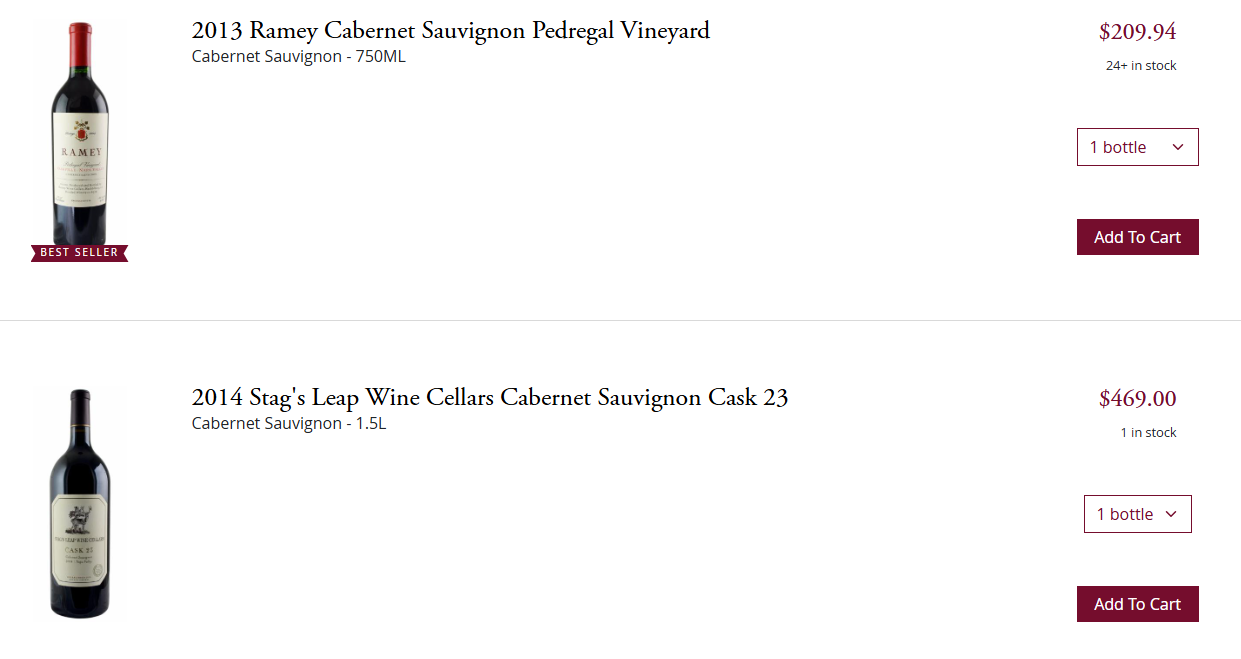
JJ Buckley sits firmly in collector territory, operating more like a private broker than a typical retailer (specializing in allocated Napa producers, back vintages, futures, and investment-grade bottles).
For serious collectors, this is where things get interesting. People say that the depth of Napa cabernet is unmatched, and the ability to source specific vintages or producers (sometimes impossible elsewhere) makes JJ a must-visit. Their Wine Advisor service is also ideal if you’re navigating high-end purchases and want guidance to avoid costly mistakes.
But this is not the place for exploratory or affordable bottles. The interface, pricing, and inventory assume you already know what you’re looking for, and the pricing reflects rarity and allocation more than casual accessibility.
It’s the online domain for collectors, investors, and experienced enthusiasts hunting specific, hard-to-find, or highly allocated cabernet sauvignon. If that’s you, it’s one of the strongest platforms in the business. If it’s not, it’s probably better to start elsewhere.
Pros
- Exceptional access to allocated Napa cabernet and rare vintages
- Strong selection of collectible and investment-grade wines
- Helpful advisor service for high-end purchasing decisions
- One of the best sources for hard-to-find producers
- Strong reputation among serious collectors
Cons
- Not designed for casual or everyday wine shopping
- High price points across most inventory
- Requires prior knowledge of brands and bottles
- Can feel overwhelming for newer wine drinkers
What to Remember When Shopping for Cabernet Sauvignon Online
When the cost of a bottle can span from $10 to $500+, you’re looking at everything from affordable to fine dining wine.
At the accessible end, you’ve got solid everyday bottles from Maipo Valley in Chile, California’s Central Coast, and parts of Washington. In the middle, there’s the more serious labels from Napa Valley and Sonoma. At the top, you’re looking at Napa cult producers, Left Bank Bordeaux, and bottles that collectors are constantly keeping their eyes on.
This is why knowing the right retailer is so important. Depending on which website you check out, you might not even see the wines you’re looking for.
- A warehouse-style site might surface thousands of cabs, skewing heavily toward everyday bottles and burying higher-end selections.
- A fine wine specialist might show you 200 highly curated bottles that are excellent, but not very budget-friendly.
- A curated retailer might build themed cases from a tight set of vetted picks, which is great for exploration but less ideal for picky or specific buyers.
Once you know what’s more your style and speed, it’s not that difficult. But if you’re new to buying wine online, this context will serve you well.
Choosing the Right Retailer for Your Cabernet
Are you hunting a collectible, looking for a dependable weeknight bottle, or somewhere in between? Knowing which retailer fits your goals makes the process faster, less stressful, and a lot more fun.
Everyday, affordable drinkers will often keep their focus on reliability and value, and bottles in the $10 to $25 range (California’s Josh Cellars and Washington’s Columbia Crest H3) are popular for weeknight dinners, casual gatherings, or keeping a dependable bottle on hand. In this range, retailers like Wine Insiders and Total Wine are often your best bet for single bottles without a big commitment and small curated packs that offer easy variety.
For the enthusiast seeking more complexity, $25 to $60 gets you wines with more structure and regional nuance. California’s Napa and Sonoma deliver with wines like Justin cabernet or Rombauer Vineyards, while Washington’s L’Ecole No. 41 is often considered great for pairing with red meat. At this level, retailers like Wine.com, Wine Access, or Wine Insiders can make it easier to reorder bottles you already enjoy and explore new producers with a bit more confidence.
But for collectors and high-end buyers, cabernet is less about price and more about prestige, aging potential, and rarity. At this end of the spectrum, you’ll find Napa legends, Bordeaux icons, and ultra-premium Napa producers through brokers or fine wine specialists like JJ Buckley.
Whatever your style or taste, finding the right online retailer can involve some trial and error. Hopefully, this guide will at least give you a starting point that matches your drinking style with the right selection and shopping experience.


We partnered with FirstLeaf Wine Club to bring you this special offer: 6 wines for $39.95 + Free Shipping. All you have to do is Take the Quiz and let FirstLeaf take care of the rest.